Some destinations quietly fall out of fashion, while others simply wait for the world to…




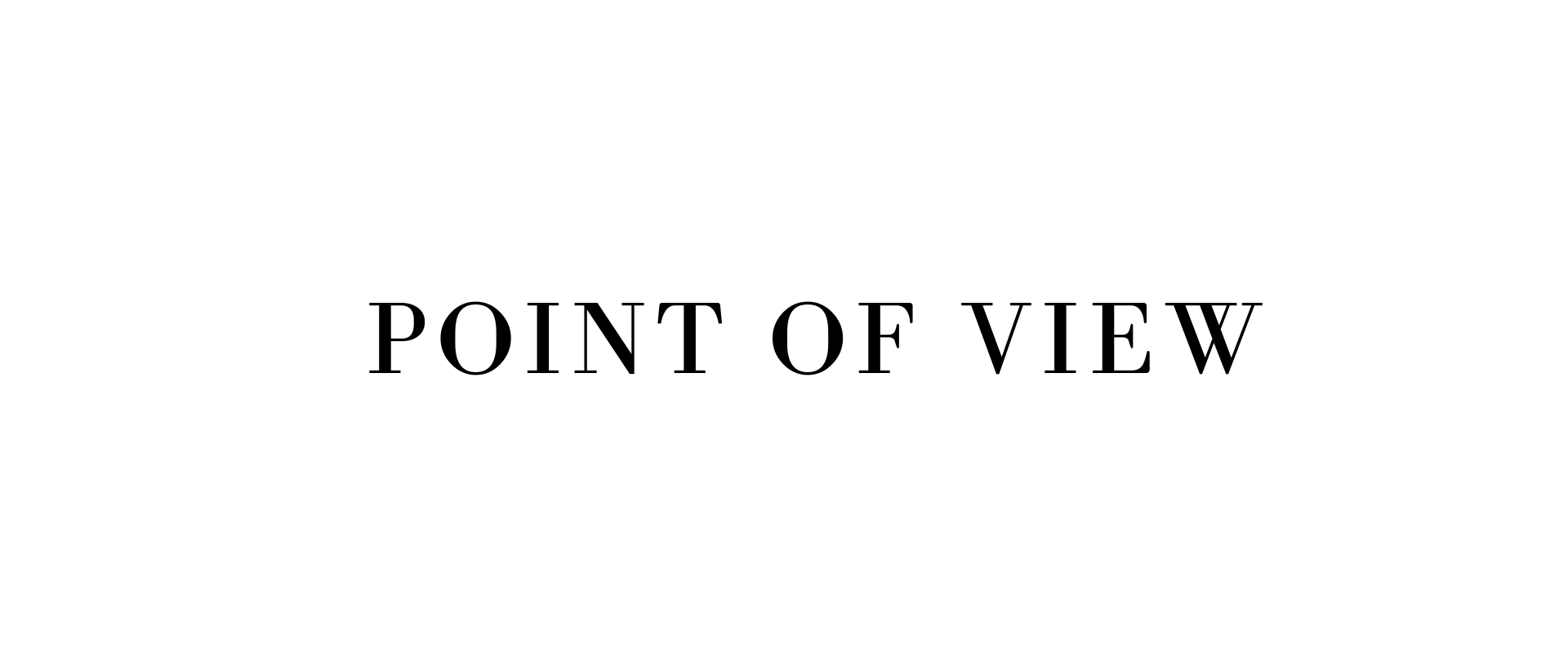

Hair is more than style. It is a signal of intent, influencing how a woman carries herself and how the world responds to her presence.
Hair has carried meaning across cultures and centuries. In ancient Egypt, elaborate wigs denoted rank. The more complex the construction, the higher the status. Medieval sumptuary laws regulated who could wear their hair loose versus bound, free versus covered. Victorian women signaled availability or respectability through updos versus down styles. In each case, hair communicated power, discipline, freedom, or constraint before a word was spoken. Women have always understood this intuitively. Hair establishes how a woman wishes to be approached, interpreted, and remembered. It is not ornamental. It is strategic.
What we call style is often something more exact: orientation. Hair changes how a woman carries herself, her tempo, her bearing, her presence. A shift in hair rarely stays visual. It recalibrates behavior.
Two Modes of Authority
The Muse and the Icon clarify this dynamic, not as opposites but as distinct postures.
The Muse
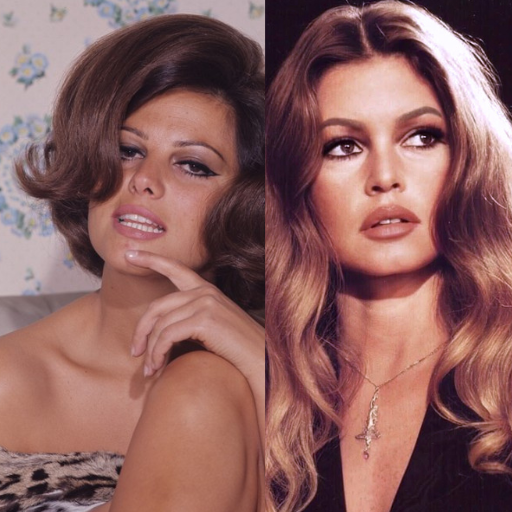
Brigitte Bardot embodied ease. Her long, deliberately imperfect hair moved before she did, softening her outline and resisting control. Nothing about it felt imposed. The effect was not passivity but magnetism. When hair is worn loose and fluid, the body often follows. Movement slows. Expression softens. Attention accumulates rather than being demanded. The Muse does not declare herself. She allows interest to gather.
Bardot’s hair suggested a woman uninterested in justification, someone comfortable being seen without explanation. The Muse draws others into her orbit through openness, not assertion.
The Icon
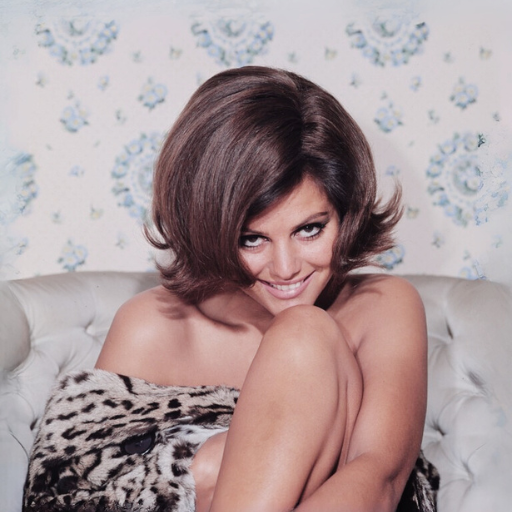
Claudia Cardinale represented something else entirely. Her shorter, shaped hair clarified her presence rather than softening it. Where Bardot suggested openness, Cardinale communicated certainty. Controlled hair sharpens authority. It frames the face with precision and eliminates ambiguity. The neck is exposed. The gaze is direct. Nothing distracts from the woman herself.
To cut, shape, and define hair is not an act of loss. It is an act of authorship. The Icon’s hair signals that nothing about her presence is accidental.
The Shift Changes More Than Appearance
The Muse and the Icon are not different women. They are different postures available to the same woman. Hair functions as a cue, primarily to the woman herself. When it changes, behavior adjusts. A woman who cuts her hair often becomes more decisive in speech, more direct in eye contact, more economical in gesture. A woman who grows it long may move with greater ease, allowing space rather than controlling it.
Celebrity hairstylist Bernard Ichkanian observes this repeatedly. Women do not just look different after a significant change. They move differently. They speak differently. Their posture shifts. Hair recalibrates confidence because it changes the feedback loop between how you see yourself and how you inhabit space. This is not performance. It is alignment.
Ava Gardner demonstrated this throughout her career. Soft waves conveyed approachability during her early Hollywood years, warmth that invited connection. Her sleeker, more architectural styles in the 1950s introduced clarity and control, sharpening her presence in dramatic roles. Later in life, her return to relaxed styling reflected a confidence no longer requiring precision to assert itself. For Gardner, hair was calibration, not reinvention.
Virna Lisi took this fluidity even further, using color as a second lever of transformation. Blonde and luminous in one period, dark and dramatically cut in another, each shift altered not just her appearance but her entire register. The blonde Lisi moved with lightness, softness, an almost ethereal quality. The brunette Lisi commanded space differently: sharper, more grounded, impossible to overlook.
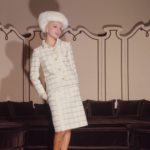
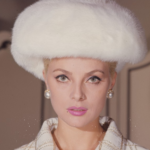
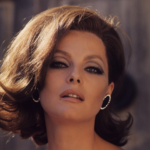
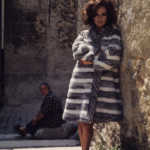
Photo credits: Virna Lisi, Moda Valentino, c. 1960; Virna Lisi, c. 1970s — Angelo Frontoni, Italy. Experimental Cinematography Center — CC BY-NC-SA.
She did not abandon one identity for another. She demonstrated that the same woman can access fundamentally different modes of presence, and that hair, both cut and color, is the mechanism that unlocks them.
Hair is power. It can command a room before you even speak.Unknown
Intent Before Image
According to Ichkanian, hair communicates intent before it communicates beauty. Immediately, it tells you how a woman wants to be read: approachable or authoritative, collaborative or commanding, open to interpretation or definitively framed.
The most confident women understand that authority has range. They are not locked into a single image indefinitely. They recognize that transformation is not abandonment. It is strategic recalibration. The point is not to choose between the Muse and the Icon permanently. The point is to recognize that both are available and to decide deliberately which one serves you now.
Building Effortless Glamour
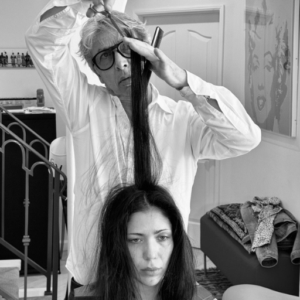
When Bernard Ichkanian creates red carpet looks, he prioritizes foundation over embellishment. The structure is established early, so the hair feels composed before any finishing begins.
He starts with clean, dry hair and applies a heat protectant. Using a large barrel curling iron or hot rollers, he creates large curls throughout the hair. The curls are allowed to cool fully before being released, ensuring they maintain their shape. Once cooled, they are gently loosened with a wide-tooth comb to form soft waves.
The look is finished with a light mist of hairspray for hold. The result is polished yet effortless, glamorous without stiffness, controlled without excess, confident in its restraint.
https://www.instagram.com/bernardichkanian
Bernard’s Essentials
YS Park Brushes — https://www.ysparkusa.com
Malibu Brushes — https://malibuc.com
Barrel Curling Iron or Hot Rollers — https://www.ghdhair.com
Oribe Dry Texturizing Spray — https://www.oribe.com/products/dry-texturizing-spray
Oribe Superfine Strong Hair Spray — https://www.oribe.com/products/superfine-strong-hair-spray
Milbon Anti-Frizz Humidity Blocking Oil — https://www.milbon-usa.com
The Choice Is Yours
The most confident women understand something simple: hair is a choice, not a commitment. It does not define you. It reflects how you want to show up right now. And when that shifts, your hair can shift with it.
You do not have to choose one version of yourself and stay there. You can be soft one season and sharp the next. You can grow it long when you want ease, cut it short when you want clarity. Neither is superior. Both are available.
Hair gives you permission to recalibrate without explanation. It lets you adjust your presence as your life evolves. That is not indecision. It is intelligence. It is the understanding that confidence is not about staying the same. It is about deciding, deliberately, who you want to be today.
So, when you change your hair, you are not just changing how you look. You are choosing how you move through the world. And that choice has always been yours.