Some destinations quietly fall out of fashion, while others simply wait for the world to…










Egypt’s Revival: From Cosmopolitan Legacy to World-Class Destination
Please select a featured image for your post
Some destinations quietly fall out of fashion, while others simply wait for the world to circle back. Egypt has always done exactly that, carrying its magnetism forward through layers of history and culture, even as attention shifted elsewhere.
Long before modern travel trends reshaped the global landscape, Egypt stood as one of the world’s most cosmopolitan destinations. In the 1950s and 1960s, cities like Cairo and Alexandria were cultural crossroads where Europeans, Middle Easterners, and Egyptians lived side by side. French, Italian, Greek, Armenian, and British communities shaped daily life, influencing architecture, cafés, schools, and social traditions. Egypt was not simply a place to visit, but a place many chose to live and build their lives. Alongside Beirut, it formed the heart of the Middle East’s jet-set circuit long before destinations like Dubai entered the global imagination. This cosmopolitan legacy laid the groundwork for Egypt’s lasting appeal.
As Egypt entered a period of political and economic transition in the latter half of the twentieth century, its relationship with the world began to change in visible ways. International communities gradually thinned, priorities shifted inward, and tourism slowed as the country recalibrated its direction. During this time, Egypt’s vast archaeological heritage, unmatched in scale and significance, was not always maintained or presented with the sustained level of investment it required, shaped less by cultural neglect than by limitations of access, resources, and competing national needs. Even as global attention softened, Egypt never lost its essence. Traditional markets known as souks remained central to daily life, while places like Khan el-Khalili continued to pulse with trade, craftsmanship, and social exchange, unchanged in spirit even as the world around them evolved.
Nile cruises, too, retained their timeless appeal, offering a slower, more reflective way to experience Egypt long before slow travel became a modern ideal, moving between Luxor and Aswan as history revealed itself not as spectacle but as a living presence rising steadily along the riverbanks. As global tourism evolved, Egypt adapted rather than disappeared. Red Sea destinations such as Sharm El-Sheikh emerged as resort centers, sustaining tourism through accessibility and leisure. Historic palaces and grand buildings were transformed into hotels, preserving architectural heritage while giving it renewed purpose. Yet for many travelers, Egypt became fragmented, experienced either as a beach destination or a brief historical stop, rather than as a layered cultural whole.
Egypt is not a country we merely visit; it is a country that visits us.Amelia Edwards
In the 1970s, Morocco experienced a similar cultural revival. Designers like Ted Lapidus drew inspiration from North Africa and the Middle East, introducing safari silhouettes and utilitarian elegance that reflected a renewed appreciation for place and heritage. Figures such as Yves Saint Laurent, whose connection to Marrakech helped reframe the region within the global imagination, became part of this broader cultural shift. His influence helped make Morocco, and by extension other places in the Middle East, synonymous with chic, repositioning the region as a source of taste and cultivated living rather than momentary appeal.
What followed was a broader shift in how the region was perceived, moving away from trendiness toward cultural substance. Travel, fashion, and design began to intersect, creating a renewed appetite for destinations with history and texture rather than surface appeal. That cycle of rediscovery set a precedent, showing how places once taken for granted could return to prominence through context and care. Egypt’s current moment echoes that pattern. Its reemergence feels less like a debut and more like a recognition long overdue.
In recent years, that fragmentation has begun to give way to a more cohesive narrative, bringing Egypt back into focus as a destination to be experienced more fully. Restoration efforts across major sites, alongside the opening of the Grand Egyptian Museum, have reshaped how the country is encountered today.
In parallel with this renewed attention, Egypt began to reassert itself on the global cultural stage, not through reinvention, but through recalibration. Travelers started to approach the country with a broader lens, drawn not only to its monuments but to its cities, landscapes, and layered everyday life. Improved infrastructure and expanded access made it easier to move between regions, allowing Egypt to be experienced as a connected whole rather than a series of isolated stops. At the same time, a new generation of visitors arrived with different expectations, shaped by visual storytelling and a desire for depth rather than checklist travel. Egypt’s appeal shifted quietly, becoming less about spectacle and more about immersion. What emerged was not a return to the past, but a more confident expression of what had always been there.
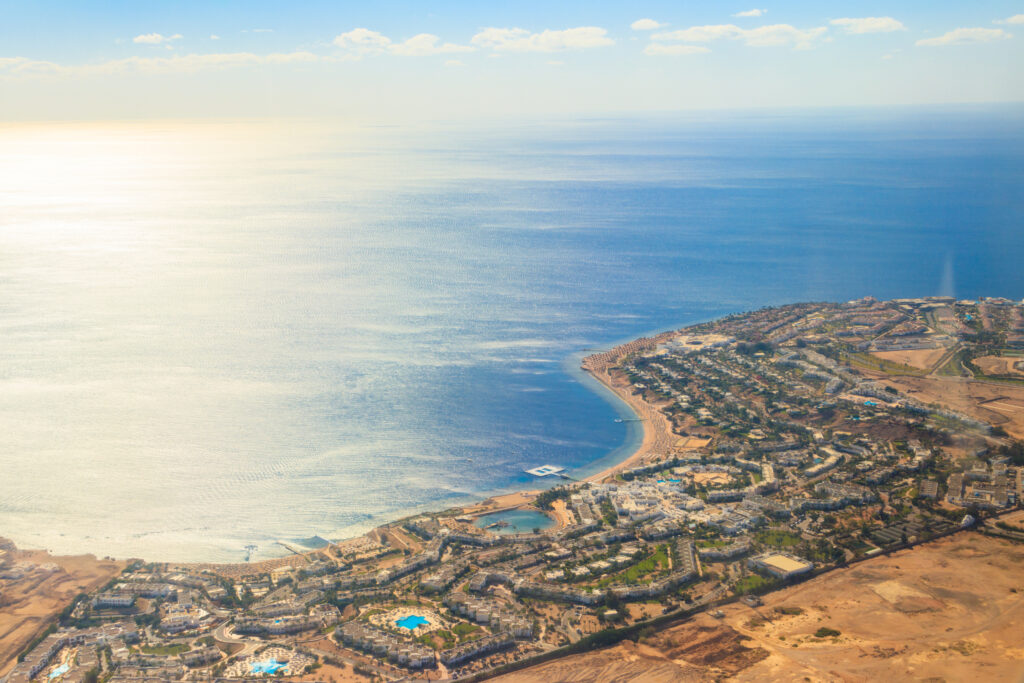
Egypt Back in Focus
This moment feels different because Egypt’s return is shaped by a broader shift in how people travel and engage with the world. Increased global visibility through social media has expanded curiosity beyond individual landmarks, encouraging travelers to experience the country as a layered whole rather than a series of highlights. Improved access and infrastructure have made it easier to move between regions, connecting cities, landscapes, and history into a more cohesive journey. The opening of the Grand Egyptian Museum added a contemporary cultural anchor, reinforcing Egypt’s position not only as a guardian of the past, but as a country actively shaping how its history is presented today.
What emerges is not reinvention, but recognition. Egypt stands once again as a global destination valued for depth, continuity, and cultural confidence rather than surface appeal. Its appeal lies in the coexistence of past and present, not through spectacle, but through lived experience. For travelers willing to look beyond the surface, Egypt offers something increasingly rare: a sense of place that feels both timeless and relevant. It is not announcing its return so much as resuming a role it has always held.